
Weighing the Options
Adoption, Surrogacy, and Purging

The Yellow Wallpaper Era
It seems like years since I was sick, but it has barely been four months.
I’d be over twenty weeks pregnant right now, finally into my second trimester. It's possible that my nausea would be over, along with the fatigue, in which case, I’d be taking spin classes and running errands as a visibly pregnant woman, full of energy and optimism.
But maybe it wouldn’t have been that way. Maybe I’d be sick, hospitalized, thirty pounds down, hanging on by a fragile HG umbilical cord . . .
I can barely recall what it felt like to be in my dehydrated, immobile body. How did it feel to hate the sight and smell of all food? Of all people and places? To subsist on a sip of water each day? To stare at the wall, the shadows moving in front of my bedroom door, unable to consume books and even the most brain-rotting of media?
For several months now, I feel like I have been in my The Yellow Wallpaper era, acting out the short story like masochistic performance art, narrating my thoughts about my “nervous” feminine condition.
Similar to Charlotte Perkins Gilman’s unnamed narrator, I’ve been writing to deal with an overactive mind. I’ve been staring at walls, watching light transform into figures and secret messages. In these visions, I’ve been trying to find an escape route to freedom from desires and thoughts, including the voice in my head telling me I am doing everything wrong.
Unlike Gilman’s narrator, my husband and family haven’t belittled and dismissed me in any way. Yet, I still feel small under a social gaze that ceaselessly judges me. And I have certainly felt directly judged and dismissed by medical professionals.
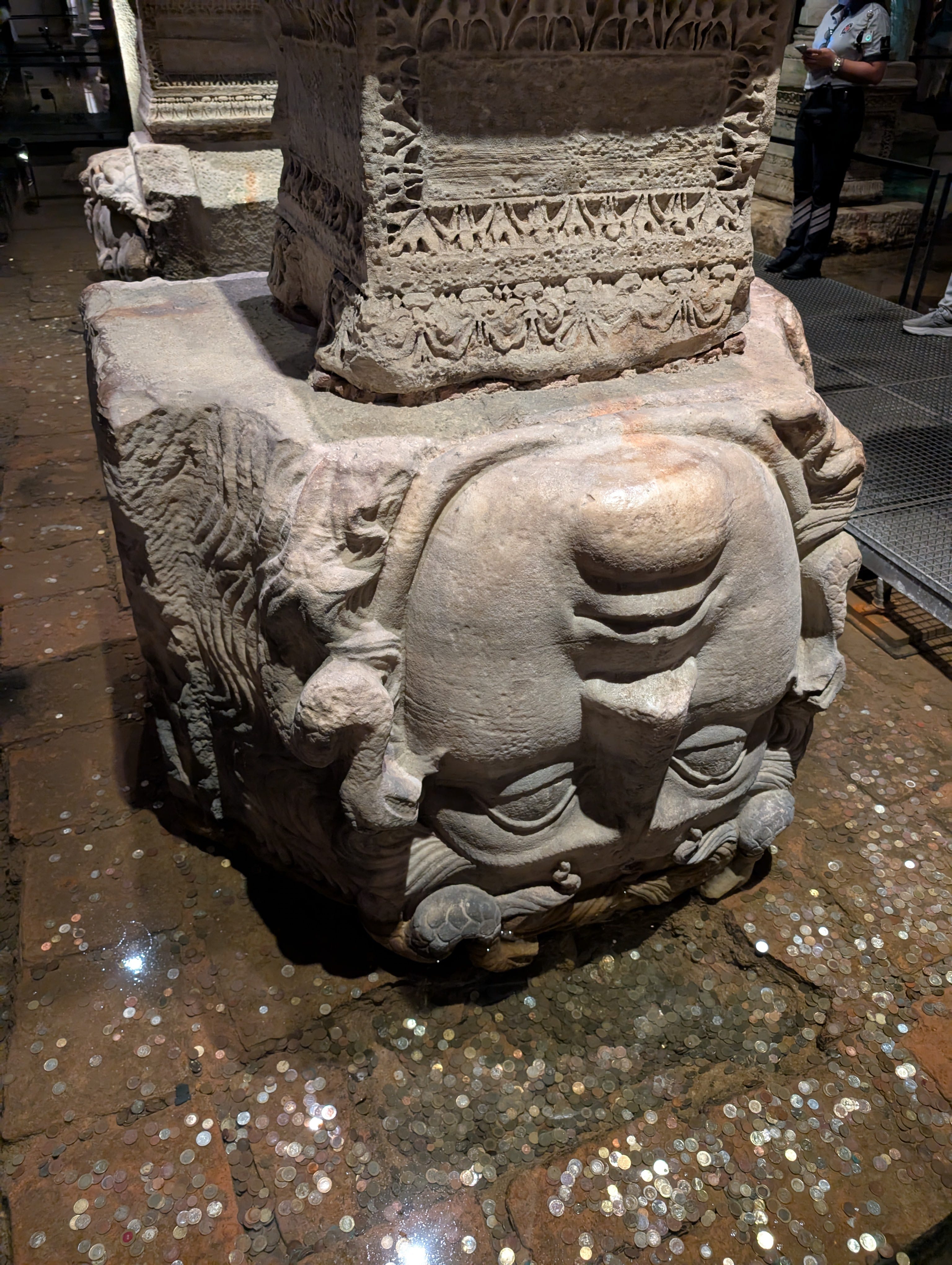
I have sought “rest cures” abroad, in Italy, in Guatemala, Istanbul, and Albania, where, on August 16th, my husband and I turned forty on a beach in Vlora (yes, we share a birthday).
These escapist excursions evidence to you that I am a woman of privilege, moving through the world to ignore her misery. You might be thinking: Poor little privileged white girl.
Yet, I think that all women, of all social standings, go through this era at least once in their lives.
To this end, Gilman succeeded in writing a timeless plot, capturing something true about existing in a world where misogyny has no origin and no ending.
Things to Consider
My body doesn’t want me to remember what happened.
But my doctor, whom I haven’t seen since a pregnancy test three months ago, wants me to try.1
In her office, it looms into sight again: the HG, the termination. I start to cry as I tell her about it.
I am surprised by my emotions. I had assumed that these events no longer influenced my composure. I’d been writing emails and shooting texts to people whom I cut off for a few months, saying: “I’ve actually had a really good summer! Feeling great in body and spirit. Can’t wait to reconnect . . .”
My tears frustrate me. They are sending the wrong message. Or, they can’t communicate the full complexity of what I feel. I don’t want the doctor or anyone to assume that my tears signify that all I have ever wanted in life is to be a mommy. I have wanted so much more in my life than that and have been disappointed by so much more than failing to stay pregnant.
The doctor is quite familiar with stories like mine, having worked in an OB clinic for many years. Yet, she seems vaguely dismayed as I recount how I had to diagnose myself and couldn’t get into an IV clinic easily.
I sense her compassion and suspect it is genuine. She has a good-witch face with a pointy nose, small, close-set eyes, and wavy silver hair, which she wears in a loose chignon.
Even though she never fully remembers me, I have always liked and trusted her. And, even though I am perpetually reintroducing myself to her, I know she listens. I try to understand what it means to work in gynecology, seeing a cyclone of women in various stages of their lives, during and after their reproductive years, some only once a year.
“Have you thought about surrogacy?” she asks.
“No,” I say. “I actually find surrogacy . . . unethical?” I pose it as a question, signalling that I am open to having my mind changed.
She looks at me, waiting for clarity.
“It seems weird to ask someone to go through all of that, being pregnant, especially now that I know, first-hand, how hard it is. Of course, I know that some women like being pregnant, but it seems like a service that we shouldn’t be able to purchase. And, on top of that, the surrogate has no further part in the life she brings into the world. The whole thing rubs me the wrong way. I’ve been thinking about adoption, maybe, but not surrogacy.”
She tells me that she once tried to be a surrogate for her sister. “She had cancer,” she explains, “but the IVF didn’t end up working. It might be something to consider if you want a baby who shares your genes.”
I wasn’t trying to say that volunteering to be a surrogate for an ill sister is unethical. But I know she knows that, so I don’t bumble through an apology.
In certain circumstances, like hers, I can see surrogacy as a non-commodified act of love. In my circumstance, though, I don’t have cancer or any severe condition that would make me feel better about asking another woman in my life to lend me her womb and put her body through something so difficult and miraculous. In my circumstance, considering my overwhelming ambivalence about starting a family at all, it doesn’t seem worth it.
“I read that if you have HG, it is very likely that your sister will have it, too,” I say. I want the doctor to know that I have a sister, and I will not call upon her for such a sacrifice.
I also tell her about Dr. Fezjo and the Metformin trials (I discussed this in a previous piece of writing). I tell her that, from what I’ve gleaned from the women in the HG Facebook group, women who tried Metformin were sick before their pregnancies and then sick during their pregnancies, although to a milder degree. It all sounds very unappealing to me.
“All the women with HG I saw in the OB clinic had it for every pregnancy.” She pauses to think. “You could also call the University and see if there are any specialists or clinical studies.”
She is trying to give me all of the options because she thinks I am very determined to have a family.
“I suppose I just need to get used to the fact that my body doesn’t want to be pregnant,” I tell her.
“These are just things to consider if you want to have a baby,” she says.
So many unsatisfactory paths.
I left the medical office that day pondering: Why not consider surrogacy? I hate to admit it, but the idea of passing on my genes, which I’ve had intentionally screened in pre-conception counseling, appeals to me, as does seeing what kind of life could spring from mixing my and my partner’s biological materials.
However, I also recognize that my curiosities come with a wealth of unfair expectations, burdening my baby’s life before it unfolds. These expectations go something like this: If my husband and I create it, it will be good and beautiful. It will be intelligent, healthy, and successful. It will be a better version of me. It will accomplish all the things I might never accomplish. Maybe it will be the widely-read writer I won’t be.
All of these assertions are wild, absurd, and hopeful speculations. To utter them is to place unfair pressure on a life that will necessarily develop independently from mine. To utter them reveals how deeply silly I am.
Yet, in truth, what I really hope to be able to do as a parent is to love and provide for my child even if it defies all of my hopes and dreams.
In this sense, adoption is probably a better test of my willingness to be a good, devoted parent who wants to support another life for reasons beyond the selfish drive to proliferate my genetic line, thereby ensuring that a part of me is carried into future generations.
I look up surrogacy in the United States and learn that it costs between 100 and 200 thousand dollars.
My curiosity about surrogacy ended at that moment.
I look up adoption in New Mexico and learn that it is free to adopt domestically. This appeals to me, but I have yet to sign up for the requisite introductory seminar.
Peopling the Planet
I find myself at a farmer’s market in the City Park neighborhood of Denver. It’s in front of a beautiful old brick high school, the kind that thirty-year-old teenagers attend in movies. I just finished swimming in a nearby recreation center and am letting my curls air-dry under the hot summer sun. After ordering food from a vendor, I sit in the grass, taking in the boisterous scene.
Driving from Albuquerque to Denver for the weekend, I was excited to see the friends I had left behind when I moved out of this awful city. My friends are the only things I miss about Denver. They are friends I might lose, too, if I keep talking unrelenting shit about Denver. (I also went to a video art exhibition for Month of Video that I wrote about here.)

Being in this farmer’s market, without anyone’s company, my aversions teem. How overcrowded it is! How expensive! The lack of diversity! The lack of culture (by which I mean cool, anti-establishment counterculture)!
I feel suffocated. Angry. Overwhelmed.
Blonde women in trucker hats with Colorado state flag patches bounce babies on their hips. Dads with handlebar mustaches talk loudly about their favorite brewery as a toddler hops around in a modern version of a Radio Flyer wagon with gray canvas siding.
Suddenly, I’m swarmed by young children and their parents, and I grow alarmingly emotional.
I feel like I am back in the doctor’s office, dealing with tears that I can’t fully explain to anyone around me.
Let’s be clear: I wasn’t crying in the farmer’s market because I so badly wanted a child of my own. Even as I have tried to be pregnant, I’m still not sure how badly I want to be a parent or even if I could ever afford it.
The expense of trying to have children has already been so much. When my pregnancy losses happened, I was only partially employed, and my partner was between jobs. Now, on the other side of this household-income stress, debts still loom. They will have to be paid off before I no longer feel anxious about spending a paycheck on organic, locally-grown groceries in a market like this one.
For these reasons, the writhing opulence of this scene undoes me. It suddenly becomes apparent how these well-off people in an expensive city at a costly event are flaunting their privilege at me in the form of children.
“Look what we get to have,” they are saying, proliferating the illusion that they have control over every aspect of their destinies and happiness. “This is a choice,” they are saying. “This is freedom. God bless Colorado. God bless blue-state America.”
I become very judgmental and filled with ugly thoughts about how these people are artless and sure to raise insipid children.
“I’m witnessing the manifestation of liberal, upper-class idiocracy,” I think.
They don’t seem to recognize how colonial their regional and national pride comes across. It doesn’t matter that they are probably pro-Palestine and anti-ICE. The fact that they are proud to patronize all this bland, empty culture highlights their unacknowledged sense of superiority and right to dominate everything around them. Don’t they know their stupid Colorado flag gear cancels out any land acknowledgment statements they might nod their heads at or even write up for the non-profit organizations they are already independently wealthy enough to work for?
Wiping away tears, I wasn’t upset that I didn’t get to be one of these mommies in their fast-fashion jelly flats and white, cult-follower PFAS dresses, buying their babes ten-dollar artisanal paletas to suck on.
I grew upset because I felt blocked from subverting this stereotype. Why can’t I carry out my own social experiment of raising children, ones who I want to show a world full of so much more beauty and possibility and love than could be bought at a bourgeois carnival?
Bitterness in gentrification, privilege, and capitalism bubbles up in me, targeting the surrounding parents as unworthy of their children, raising them solely to be mindless and entitled consumers. I am not frustrated with them—I am frustrated by the social structures that reproduce them.
I am frustrated that the book was closed on my pregnancy without my consent, that my body wouldn’t allow me to decide whether I could be a parent or not. I am outraged that these parents make child-rearing look so easy and natural. I am mad that life on this overpopulated planet is continuing in such a banal and nasty way.
Fear of Crying in Public
Later at dinner with someone, I try to recount the complexity of the thoughts and emotions I experienced at the farmer’s market.
Finding myself crying in frustration once more, I realize I have again lost control over my narrative. Will I ever be able to convey to anyone that my tears aren’t the cliche ones of a baby-crazy non-mother?
“I’m sorry,” I say. “I don’t know why I am crying.”
“It’s OK,” they say, tears coming into their own eyes. “It’s OK to have emotions.”
As they invite me to cry, I hear them thinking: “Thank you for being vulnerable with me when you always try to be so stoic and reserved. This means a lot to me.”
I know they genuinely love me and are just trying to be helpful and sympathetic.
However, they don’t seem to realize that I come across as hard and emotionally blocked with people because I find so many of them too keen to step in as the savior I never asked for. These people see my struggle as their time to shine, to swoop in and be the shoulder to cry on. I am terrified to cry in front of them, knowing it leads to miscommunication, that they will interpret my tears as saying, “I need your help,” when I don’t need any help, I just need everyone to forget that I ever started crying.
Perhaps my anxiety about crying in front of this friend led to my crying in front of them. This predicament was probably inevitable.
A couple of weeks later, the unsolicited help came in the form of a voice text, asking if I had thought about inexpensive Ukrainian surrogates.
No, this is one thing I have not considered, although I now consider the repugnant irony of it: “Hi, desperate Ukrainian woman in a war-torn country? I was wondering if my Russian husband and I could rent your womb for a few thousand dollars?”
I’m irritated, but what did I expect after all the public tears that confused this person about what I really want?
And actually, I still don’t know what I really want.
I only know that I don’t want a Ukrainian surrogate and that I don’t want assistance navigating my deep ambivalence. This is not something anyone can “help” me with.
Imagining Postpartum
On the drive back to Albuquerque, I listen to two audiobooks—memoirs about women who had reluctant abortions and difficult pregnancies. This is not intentional.
The first is Britney Spears’s The Woman in Me. Talk about a The Yellow Wallpaper era. I can’t imagine being placed in a conservatorship under a greedy, controlling father like Britney was, forced to sing and dance at his whim, while he filled his pockets from her non-consensual labor.
A man having that much control over me is my worst nightmare. My anger and frustration are so intense as I drive–I’m shocked that I don’t rip the steering wheel out of my car.
Because I hadn’t tuned in to all of the Britney drama growing up, I never realized that her famous meltdown, which paved the way for her family to legally control every aspect of her life, came at the heels of two back-to-back pregnancies, both of which plagued her with post-partum depression.
She also discusses how she submitted to the unjust conservatorship because she didn’t want to risk having her children taken from her.
She paid such a high price for motherhood.2

The second book I listen to is Lisa Marie Presley’s From Here to the Great Unknown, co-written with her daughter, Riley Keough, since Lisa Marie died before the book’s completion.3
After seeing Sofia Coppola’s Priscilla, I grew interested in Priscilla Presley’s The Yellow Wallpaper era. Or maybe we could more accurately deem it as her “trapped-princess-in-a-castle” era, during which she was groomed to be Elvis’s exclusive doll. She was like Rapunzel in a tower at Graceland, whose prince forgot her as soon as she became pregnant, which signaled her entry into womanhood. Thereafter, she was no longer an innocent, virginal girl.
Lisa Marie, I had heard, disliked Coppola’s film, finding it an unfair portrayal of her father.
Despite her keen desire to set the record straight about her father’s character, though, Lisa Marie doesn’t reveal anything significant about Elvis in her memoir. She was, after all, only nine when he died. So, the debate about whether he was a sexual predator or not remains open.
You do learn, with no lost poignancy, that Lisa Marie spends her whole life grieving the father she loved and barely got to know.
You also learn that substance abuse took control of her life after she was put on painkillers following the C-section birth of her twin daughters.
Her depression grew, and her will to live also diminished after her son killed himself.
Like Britney, Lisa Marie sacrificed so much for motherhood, which was arguably one of the causes of her untimely death.

To some degree, these stories made me feel relieved at bypassing childbirth and motherhood. Yet, I don’t think either woman would be happy to know that their tales deterred anyone from getting pregnant and being a mother. I think both of them would argue that being mothers was the best thing that ever happened to them in their respective lives.
Most mothers I have met are indeed happy to admit that yes, childbirth and motherhood are hard and life-threatening, but totally worth it.
As I imagine post-partum life, though, I overwhelmingly feel like I dodged a bullet. Is it OK to feel that way?
Is it OK to start imagining a really, really good life without children? A life in which I don’t have to regret having the children I did have, even if I ended up loving them so much that I would die for them?
Is it OK to never have children who would make me feel like I have to give up my life for theirs? Or to never have to feel like dying because my children couldn’t thrive in this world, or, for whatever reason, departed too soon. There’s no guarantee, after all, that anyone's offspring will outlive them, even after all the pain and sacrifice of bringing them here.
Besides, I would already give up my life to save the people I deeply, unconditionally love. I already fear outliving these individuals. I already suffer for the people I am inextricably bonded to.
So, even if avoiding childbirth helps me avoid possibly deeper tragedy and severe emotional distress, I’m still not avoiding any of the hurt and heartbreak that comes from being a sociable human capable of bestowing and receiving love. I am overflowing with the pain and knowledge of what it means to love and be loved.
Is recognizing all of these things the first step in letting go and just living my childless life? Or am I coming around a bend to another thing to consider, another possibility to have a future and a life?
Puking for the First Time in My Forties
In Vlora, Albania, a day or two after I turned forty, I ride a rusty bike with my partner and some friends to a beach south of the city. The beaches closest to Vlora are known to make people sick, and some people in our group have already fallen prey to a virus.
After swimming and eating pizza, we save a slice for a dog that we saw when we first took the dirt path leading to the beach. She has hanging tits, signifying that she has recently given birth. Leaving the beach, we find her almost where we left her, lying in the middle of the road.
Now, she is under the watch of an elderly man in a bright orange construction vest who acts as if his sole job is to watch over her. As a couple on a moped gets ready to pass her, he rises from his seat on the side of the road to stand in front of her.
I feel shy about offering the dog the unhealthy food under the watch of this man. I show my offering to him and point at her. He shrugs and gestures to her as if to say, “You can try.”
After I place the pizza in front of her, the man picks it up and uses it to lure her to a safer position on the side of the road next to him.
Pushing our bikes up a hill to the main road to get back to town, I find that my bike chain is stuck. My friends immediately set to work, and the man walks up the hill to help us, too. After a bit of teamwork, we fix it.

During the ride into the city, my stomach cramps. I should easily recognize nausea and the need to vomit, but my denial pushes the thought aside. Haven’t I suffered enough? It seems too unfair to succumb to a stomach virus right now.
We dismount at the bike rental, and I leave my bike with my friends, asking them to check it in for me as I leave to be sick. Returning to the room I am staying in, I throw up all the pizza inside of me before going to bed for the next fifteen hours.
Surprisingly, I don’t wake up to self-pity and continued feelings of an unfair universe. I wake up feeling grateful that I could sleep off this illness, that it hadn’t left me in a state of conscious paralysis, unable to do anything but sit with my misery and stare at the metaphorical wallpaper. I wake up thankful that this ailment is transitory and won’t be accompanied by any life-or-death decisions.
I think about these things, but I don’t feel triggered by them. The vomiting and nausea don’t transport me back to the scenes of my pregnancy. There are no tears, and I wonder if they have finally dried up for now.
Over the next few days, I listen to my friends relate their symptoms as we check in on each other. Only a small percentage of us skirt this virus.
I want to tell everyone about how my symptoms compare to those I had with HG, but I’m not sure how many of them know about what happened to me. Plus, I don’t want to put myself in the position of telling the story to those who don’t know.
I also don’t want to center myself as an object of pity.
There was already one uncomfortable moment in which a drunk, maudlin friend—a mother—proclaimed in front of some of the others, “You’re still healing!” She was protesting my choice to kneel on a hard surface instead of taking a chair. I tried to shrug off her comment and averted my eyes, indicating, Let’s not make a scene. She didn’t catch the hint, though. She grabbed my wrist, insisting, “You are.”
I want to avoid the saviors, but I also want to brag and exclaim, “This isn’t even half as bad as my body rejecting pregnancy.”
I want to be obnoxious because I know I can finally relate what happened to me as something a little comical, given the present context. Plus, I know I won’t cry now, relating my experience. Instead, I might find myself laughing and contemplating the different mixed signal laughter, as opposed to tears, produces.

I say doctor, but really, she’s a nurse practitioner. I’m not sure I’ve ever seen a physician—a medical doctor (MD) or osteopathic medicine doctor (DO)—in my adult life. Everyone attending to me has been a physician assistant, a nurse practitioner, or a certified nurse midwife. They have all been someone assigned to me by online directories that find people in my insurance network with the first available appointment.
My primary care physician, a CFNP, was assigned by my insurance two years ago, and I’ve never met her. She knows nothing about me, nothing about my body and pregnancies and losses. To avoid having to relate, again, this account of myself, I might never meet her. If I do ever make an appointment with her, I might just call the clinic and request that she subscribe to my Substack, saying that she will find all of the “highlights” of my medical history there.
I’m only a few years younger than Britney, but I was completely oblivious to our age similarity when I saw the “Hit Me Baby One More Time” video on MTV’s TRL. We clearly inhabited different realities, and I was wholly uninterested in pop music, which I saw as inauthentic and marketed to me like candy.
I was too punk for Britney and so, I was dismissive of her and couldn't care less about the drama surrounding her relationship with Justin Timberlake. I was oblivious to how the media skewered her, only vaguely remember her “meltdown” and shaved head, and was late to the game with the “Leave Britney alone!” early YouTube meme.
Maybe paying attention to Britney’s plight has only become possible in this era of strong women pop stars who directly expose the media and music industry for its bad behavior—Taylor Swift, Beyoncé, Billie Eilish, and Chappell Roan, to name a few. Under these circumstances, Britney’s story finally, and rightfully, compels older millennials like me.
Once the #freeBritney movement started, my ears perked up. She was now on my radar, and I feel almost ashamed that she never was before. For so long, I thought she was a “tool” without realizing that by labeling her in this way, I, too, was playing into the media’s harmful representation of her as a puppet without agency, someone who could only do what she was told and had no “real” creative talent or input.
Britney, if you’re reading this (I know you aren’t), I was so wrong about you!
In this book, you learn that Keuogh’s daughter Tupelo is born using a surrogate. I was trying to find a smooth way to make this connection in this post, but failing to do so, I relegated this fact to a footnote.